
Object Record
Images
Metadata
Object Name |
Flatiron |
Caption |
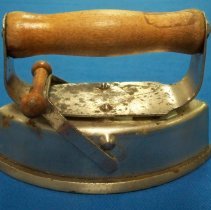
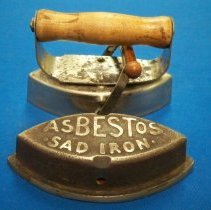
Small flat iron |
Description |
Small asbestos sad iron with removable wooden handle & flip type release mechanism. The bottom part of the iron was heated on the cook stove. When the iron was hot, the handle was connected and used until cool. Then the process started over. The small iron was used for small areas such as shirt collars and cuffs. Used in the Ida Bernhagen home, Hutchinson Township. "Flat irons were also called sad irons or smoothing irons. Metal handles had to be gripped in a pad or thick rag. Some irons had cool wooden handles and in 1871 a detachable handle was patented in the US. This stayed cool while the metal bases were heated and the idea was widely imitated. Cool handles stayed even cooler in "asbestos sad irons". The sad in sad iron (or sadiron) is an old word for solid. Goose or tailor's goose was another iron name, and this came from the goose-neck curve in some handles. A person needed at least two irons on the go together for an effective system: one in use, and one re-heating. Large households with servants had a special ironing-stove for this purpose. Some were fitted with slots for several irons, and a water-jug on top. At home, ironing traditional fabrics without the benefit of electricity was a hot, arduous job. Irons had to be kept immaculately clean, sand-papered and polished. They must be kept away from burning fuel, and be regularly but lightly greased to avoid rusting. Beeswax prevented irons sticking to starched cloth. Constant care was needed over temperature. Experience would help decide when the iron was hot enough, but not so hot that it would scorch the cloth. A well-known test was spitting on the hot metal, but Charles Dickens describes someone with a more genteel technique in The Old Curiosity Shop. She held "the iron at an alarmingly short distance from her cheek, to test its temperature..." [Notes from oldandinteresting.com] |
Catalog Number |
2005-0242-011 |
Search Terms |
Irons (Pressing) |
Subjects |
Irons (Pressing) |
People |
Bernhagen, Ida |